5 Aug, 2026
A Lichen Community at West Midlands Safari Park
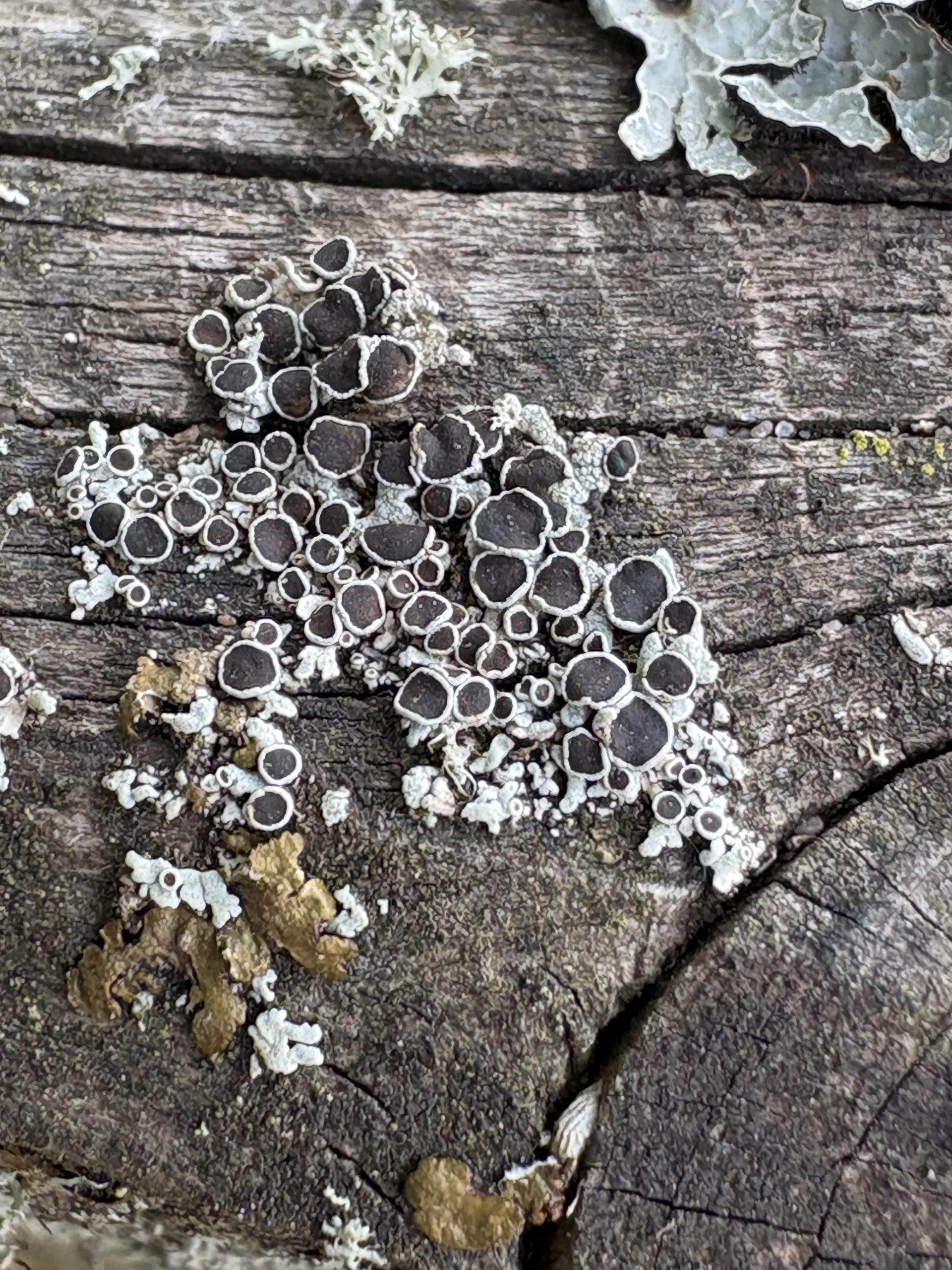
One photo, four species — a nice little snapshot of bark lichen diversity from WFSG’s August meeting at the West Midlands Safari Park SSSI.
The main event was a good patch of Physcia aipolia (Hoary Rosette Lichen), a pale grey rosette-forming species with distinctive white-rimmed, dark-centred apothecia and a subtle white mottling across the lobes, best seen with a hand lens when damp. Common wherever there’s well-lit, nutrient-rich bark.
Alongside it was Physcia tenella, a smaller, greyer relative with long, fairly upright lobes fringed with obvious marginal cilia, and soralia (powdery reproductive granules) breaking out at the curled-back lobe tips. It’s one of the most widespread bark lichens going, especially on twigs, and a classic sign of nitrogen enrichment — so no surprise finding it here too.
Sharing the same patch of bark was Parmelia sulcata, the Hammered Shield Lichen — a much bigger, silvery grey-green lichen with a network of ridges across the lobes giving it that “hammered” texture, and soralia developing along the network rather than at the tips. Very tolerant of pollution and one of the commonest foliose lichens in the country, on trees and rock alike.
And tucked in growing within the aipolia itself was Melanelixia glabratula, the Polished Camouflage Lichen — a green to warm brown, shiny-lobed species that gets its name from small finger-like outgrowths (isidia) developing on the older, more matt parts of the thallus. Genuinely easy to walk past, as the colours blend right into the bark, but a good one to train your eye on.
Four species, one small patch of tree bark — a decent reminder of how much is going on up close if you stop and actually look.
A Lichen Community at West Midlands Safari Park
Photograph: Ann Hill